The Multi-Ecosystem Dilemma in Modern Smart Homes
The smart home landscape is notoriously fragmented. Homeowners frequently find themselves trapped in walled gardens, purchasing devices that only work within a single ecosystem. You might have an Apple HomePod in the living room, a Google Nest Hub in the kitchen, and Amazon Echo dots scattered throughout the bedrooms. While each ecosystem offers unique voice assistant features and native automations, getting them to communicate seamlessly has historically been a frustrating, expensive, and overly complex endeavor.
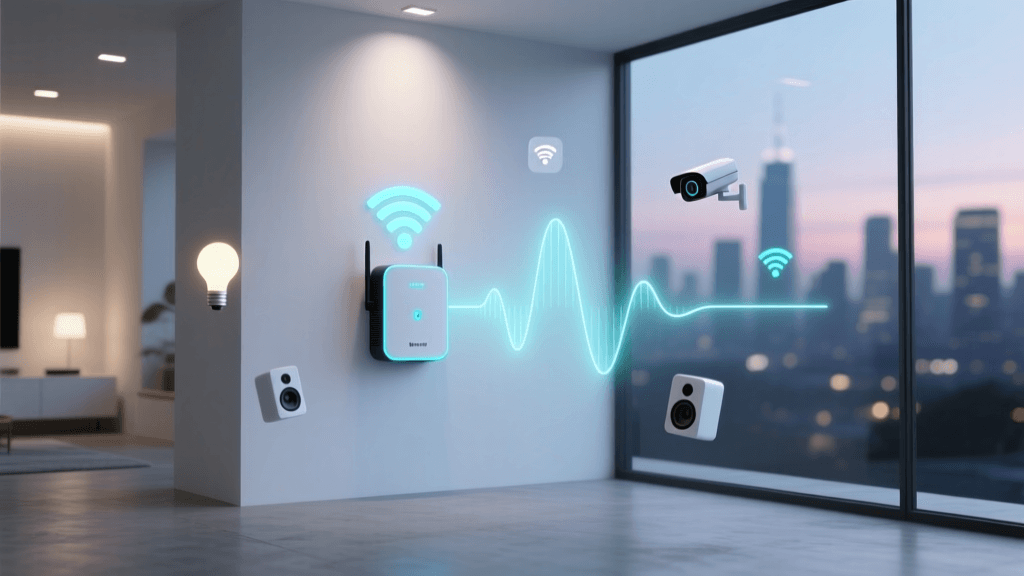
For DIY installers and smart home enthusiasts, the goal is multi-ecosystem integration: the ability to trigger a Philips Hue light (native to Hue/Google) using an Apple HomeKit motion sensor, while logging the data and running advanced logic through a central, agnostic hub. Today, thanks to the advent of the Matter protocol and the maturity of Home Assistant, bridging these silos is not only possible but highly reliable. This guide will walk you through the hardware, network configuration, and step-by-step setup required to unify Apple, Google, and Amazon ecosystems under one roof.
Understanding the Architecture: Matter and Home Assistant
To successfully integrate multiple ecosystems, we must rely on two foundational pillars: an open-source automation hub and a universal communication standard.
The Role of Home Assistant
Home Assistant (HA) is an open-source home automation platform that prioritizes local control and privacy. Unlike cloud-dependent hubs, HA runs on your local network, aggregating devices from thousands of different brands and protocols (Zigbee, Z-Wave, Wi-Fi, Thread, Bluetooth) into a single dashboard. More importantly, HA can act as a bridge, exposing its unified device list back out to Apple HomeKit, Google Home, and Amazon Alexa simultaneously.
The Matter Protocol and Thread Networking
According to the Connectivity Standards Alliance (CSA), Matter is an open-source, royalty-free connectivity standard designed to unify the smart home. Matter operates over Wi-Fi and Ethernet for high-bandwidth devices, and over Thread for low-power sensors and smart locks. Thread is a mesh networking protocol that eliminates the need for proprietary dongles, allowing devices to route data through one another to reach a Thread Border Router (like an Apple TV 4K or Nest Hub Pro).
Pro-Tip: When building a multi-ecosystem home, prioritize Matter-over-Thread devices for sensors and switches. They offer vastly superior battery life, local execution speeds, and native compatibility with almost every major hub on the market.
Hardware Prerequisites for Multi-Ecosystem Bridging
Before configuring software, you need the right hardware foundation. A multi-ecosystem setup requires a central server, robust networking, and appropriate border routers.
1. The Central Hub (Home Assistant Server)
While you can install HA on a Raspberry Pi, the modern standard for stability is dedicated hardware or a low-power mini PC.
- Home Assistant Green ($99): The official plug-and-play hub. Ideal for most homes under 3,000 sq ft.
- Intel NUC / Mini PC ($150 - $250): Running an N100 processor with 8GB RAM. Best for power users running Frigate NVR alongside HA.
- Raspberry Pi 5 ($80+): A capable budget option, though SD card corruption remains a long-term risk without an external SSD.
2. Thread Border Routers
To utilize Matter-over-Thread devices across ecosystems, you need Border Routers to bridge the Thread mesh to your IP network. Fortunately, many devices you may already own serve this purpose:
- Apple TV 4K (3rd Gen): Acts as a premium Thread Border Router and HomeKit hub.
- Google Nest Hub (2nd Gen) / Nest Wifi Pro: Provides Thread routing for the Google ecosystem.
- Eve Energy Smart Plugs ($40+): Ecosystem-agnostic Thread routers that bolster your mesh network.
Hub Ecosystem Comparison
| Hub Device | Native Ecosystem | Matter Controller | Thread Border Router | Approx. Cost |
|---|---|---|---|---|
| Home Assistant Green | Agnostic / HA | Yes (via Matter Server) | No (Requires external) | $99 |
| Apple TV 4K (128GB) | Apple HomeKit | Yes | Yes | $149 |
| Google Nest Hub Max | Google Home | Yes | Yes | $229 |
| Amazon Echo Show 8 (3rd Gen) | Amazon Alexa | Yes | Yes | $149 |
Network Preparation: VLANs and mDNS Routing
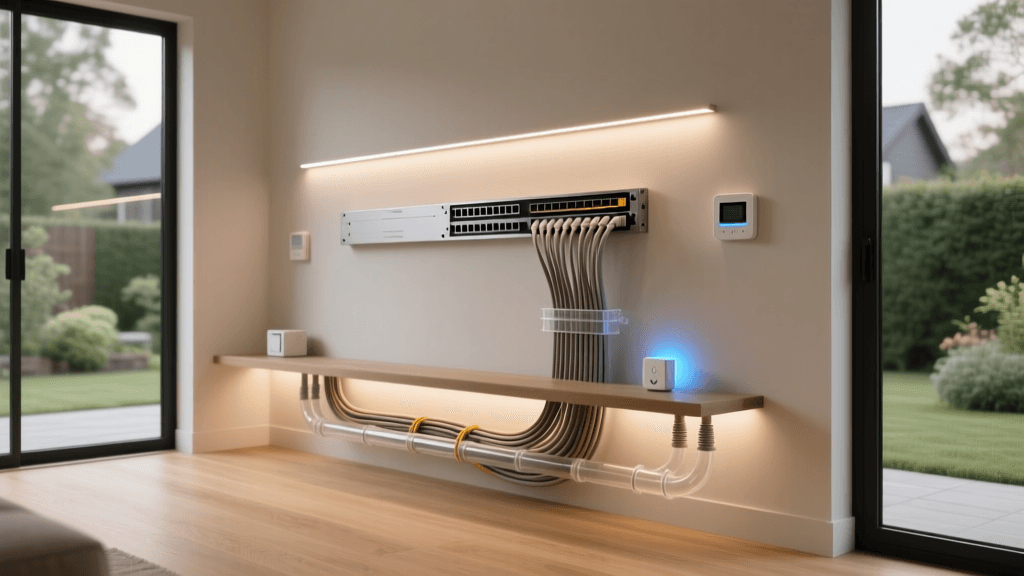
The most common point of failure in multi-ecosystem setups is the local network configuration. Matter and local discovery protocols (like Chromecast, AirPlay, and HomeKit) rely heavily on mDNS (Multicast DNS). mDNS broadcasts do not cross standard VLAN boundaries, which can break device discovery if your IoT devices are isolated from your main network.
Step 1: Create an IoT VLAN
Using a prosumer router (like a UniFi Dream Router or pfSense box), create a dedicated VLAN for IoT devices. This isolates cheap, insecure smart bulbs from your personal computers and NAS drives. Assign this VLAN to a dedicated 2.4GHz Wi-Fi SSID (e.g., SmartHome-IoT). Disable "band steering" on this SSID, as many smart home chips only support 2.4GHz and will fail to connect if the router attempts to force a 5GHz handshake.
Step 2: Configure mDNS Reflectors
If your Home Assistant server is on your main LAN, but your smart devices are on the IoT VLAN, you must enable an mDNS reflector. In UniFi, this is found under Settings > Networks > [Your Network] > Enable Multicast DNS. This allows your phone, Home Assistant, and Apple TVs to "see" the Matter devices on the isolated VLAN during the commissioning process.
Step-by-Step: Commissioning Matter Devices Across Ecosystems
With your network prepped and Home Assistant running, it is time to bridge the ecosystems. The golden rule of modern multi-ecosystem setup is: Commission to the native app first, then share to Home Assistant via Matter.
Step 1: Native App Commissioning
Take your new Matter device (e.g., an Eve Motion sensor or a Wiz smart bulb). Open the manufacturer's app or your preferred native ecosystem app (Apple Home or Google Home). Scan the QR code to add the device to that primary ecosystem. This establishes the device's Thread credentials and anchors it to your primary Border Router.
Step 2: Generate the Matter Pairing Code
Once the device is online in its primary app, navigate to the device settings and look for "Matter", "Linked Services", or "Share Device". Select Turn On Pairing Mode or Get Pairing Code. The app will generate a 12-digit manual pairing code. Keep this screen open.
Step 3: Import into Home Assistant
For detailed configuration, refer to the official Home Assistant Matter Integration documentation. In your HA dashboard:
- Navigate to Settings > Devices & Services.
- Click Add Integration and search for Matter (BETA) (Note: As of recent updates, the Matter Server is a required add-on).
- Ensure the Matter Server Add-on is installed and running in your HA Supervisor menu.
- Select Commission a new device and enter the 12-digit pairing code from Step 2.
- Home Assistant will securely handshake with the device over your local network, pulling in its entities without removing it from the Apple/Google ecosystem.
Step 4: Expose HA Entities Back to Voice Assistants
Now that Home Assistant has aggregated your Zigbee, Z-Wave, and Matter devices, you can expose them back to ecosystems that don't natively support them. For example, to get a Zigbee Aqara door sensor into Apple HomeKit:
- Go to Settings > Devices & Services > Apple HomeKit.
- Configure the bridge, selecting the Aqara sensor entity.
- Scan the generated HomeKit QR code with your iPhone.
- The Zigbee sensor now appears in Apple HomeKit as if it were a native Thread device.
Visualizing Performance: Local vs. Cloud Latency
One of the primary reasons DIY installers pursue local multi-ecosystem hubs is latency. Relying on cloud servers to translate a command from an Echo Dot to a HomeKit-enabled light introduces unnecessary delay. Below is a comparison of average command latency based on protocol and routing methodology.
Smart Home Command Latency by Protocol and Routing Methodology
As the data illustrates, local LAN execution via Home Assistant and Matter over Thread provides near-instantaneous response times (under 50ms). This is critical for automations like motion-triggered lighting, where a 400ms cloud delay feels noticeably sluggish to the human eye.
Advanced Automation: Cross-Platform Workflows
With all devices unified in Home Assistant, you can create complex automations that ignore ecosystem boundaries. Consider the following real-world scenario:
The "Movie Time" Cross-Ecosystem Routine
The Goal: When the user says "Hey Google, Movie Time" to a Nest Hub, the living room blinds close, the lights dim, and the Apple TV turns on.
- Trigger: Google Home Routine triggers a virtual switch exposed via the Home Assistant Google Assistant integration.
- Action 1 (Zigbee): HA sends a local Zigbee command to an Aqara Roller Shade driver.
- Action 2 (Matter/Thread): HA sends a Matter command to a Nanoleaf light strip to dim to 20%.
- Action 3 (HDMI-CEC / IR): HA triggers an IR blaster or HDMI-CEC command to wake the Apple TV 4K and launch the Plex app.
This level of interoperability is impossible within a single native app but is trivial to set up using Home Assistant's visual automation editor or YAML configuration.
Troubleshooting Common Integration Hurdles
Multi-ecosystem setups are powerful, but they introduce unique networking and protocol challenges. Here is how to resolve the most common issues encountered during installation.
1. Matter Commissioning Timeouts
Symptom: Home Assistant fails to pair the device, timing out at 90%.
Fix: This is almost always an mDNS or subnet issue. Ensure your smartphone (which acts as the Thread commissioner during setup) is connected to the exact same Wi-Fi SSID and subnet as the Home Assistant server. If using a mesh Wi-Fi system with IoT isolation enabled, temporarily move the HA server to the IoT VLAN for commissioning, or ensure UDP port 5353 (mDNS) and UDP port 5540 (Matter) are allowed across VLAN firewalls.
2. Thread Mesh Partitioning
Symptom: Thread devices respond slowly or show as "Unavailable" in HA, despite being physically close to a router.
Fix: Thread networks can "partition" if you have multiple Border Routers (e.g., an Apple TV and a Nest Hub) operating on different Thread credentials. To unify the mesh, ensure all your primary ecosystems are updated to the latest firmware. Alternatively, use Home Assistant's Thread Integration dashboard to view your Thread topology and manually prefer a single, stable Border Router (like an Eve Energy plug) to anchor the mesh.
3. State Synchronization Delays
Symptom: You turn on a light via a physical Matter switch, but the Google Home app takes 5 seconds to update the UI.
Fix: Cloud polling intervals are to blame. By routing the device through Home Assistant via Matter, the local state updates instantly. To fix the native app UI delay, prioritize using Home Assistant's dashboard on your wall-mounted tablets or phones, bypassing the native Google/Apple apps for daily control.
Conclusion
Building a multi-ecosystem smart home no longer requires choosing sides or sacrificing functionality. By leveraging the universal language of Matter, the low-power mesh of Thread, and the agnostic power of Home Assistant, DIY installers can create a resilient, lightning-fast, and deeply integrated smart home. While the initial network configuration and VLAN setup require a moderate learning curve, the resulting system offers unparalleled flexibility, ensuring that your smart home works for you—regardless of which voice assistant you happen to be standing next to.