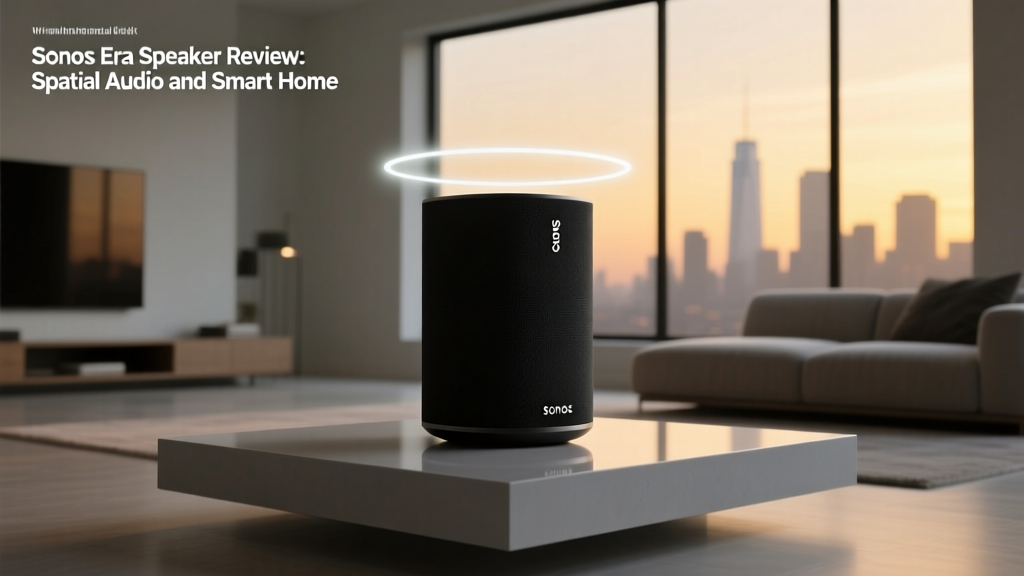
The Sonos Era lineup, specifically the Sonos Era 100 and Sonos Era 300, represents the pinnacle of compact spatial audio for smart homes in 2026. If you want immersive Dolby Atmos without a full surround system, the Sonos Era 300 is unmatched in its class. For budget-conscious stereo pairing and multi-room background audio, the Sonos Era 100 remains the gold standard. This sonos era review is designed for audiophiles and smart home integrators deciding between upgrading legacy Sonos One speakers or building a new multi-room ecosystem from scratch.
TL;DR: Key Takeaways
- Best for Spatial Audio: Sonos Era 300 delivers true Dolby Atmos from a single compact unit.
- Best for Budget Stereo: Sonos Era 100 offers excellent clarity and seamless stereo pairing.
- Smart Home Ready: Both models feature native Thread and Matter support for ultra-low latency automation.
- Verdict: The Era series justifies the upgrade from older Sonos models primarily through acoustic architecture and modern networking protocols.
Model Comparison: Sonos Era 100 vs Era 300
Sonos Era 100 Acoustic Profile
The Sonos Era 100 is engineered for precise stereo separation in a compact footprint. It features a 25% larger midwoofer compared to the legacy Sonos One, resulting in deeper bass response and a 47% wider soundstage. Weighing exactly 2.4 kg, it is dense enough to minimize cabinet resonance while remaining highly portable.
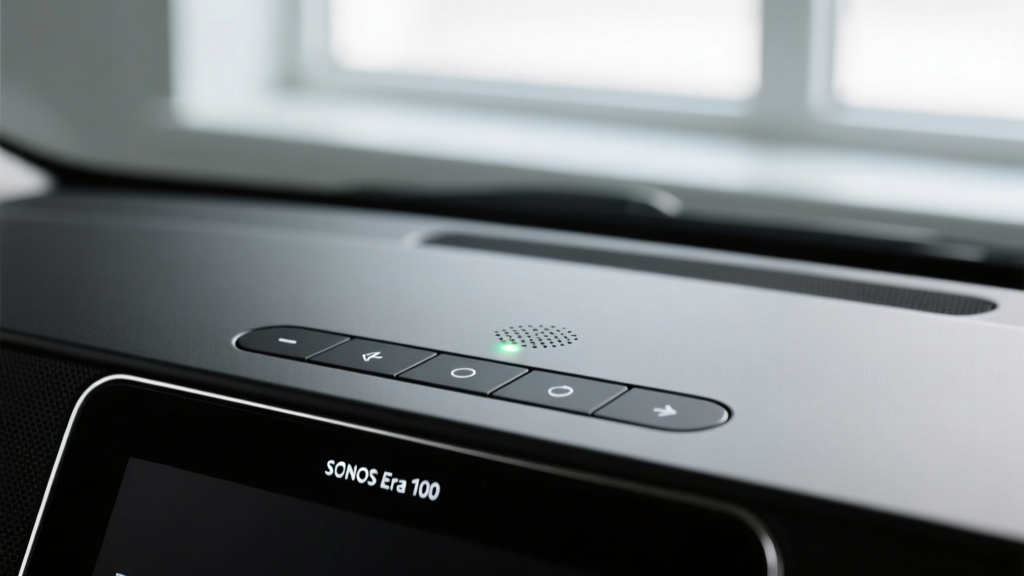
For users asking if the Sonos Era 100 is worth it in 2026, the answer depends on your room size. It excels in bedrooms, kitchens, and small offices where a single speaker or a paired stereo set provides optimal coverage without overwhelming the space.
Sonos Era 300 Architectural Design
The Sonos Era 300 abandons traditional cylindrical designs for an hourglass shape that houses 6 discrete amplifiers and custom waveguides. This unique geometry allows for 120-degree horizontal dispersion and dedicated upward-firing drivers. According to Sonos official specifications, this design is explicitly built to bounce audio off your ceiling and walls.
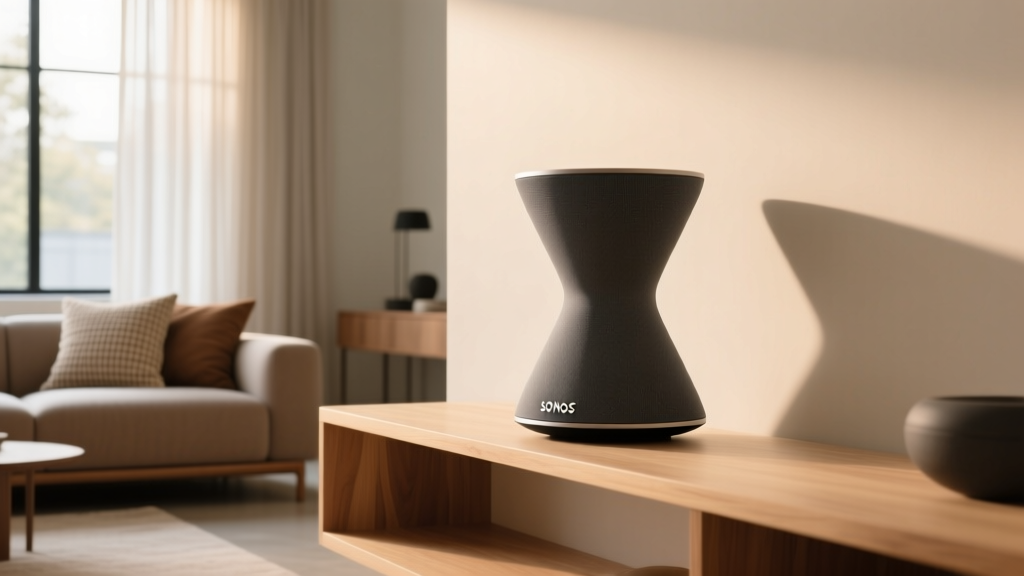
Retailing at a $449 price point, the Sonos Era 300 targets dedicated listening rooms and home theater setups. It serves as a standalone spatial audio powerhouse or as discrete rear surrounds for a Sonos Arc soundbar configuration.
Audio Performance and Spatial Acoustics
Dolby Atmos Implementation
Spatial Audio is an immersive sound technology that places audio objects in a three-dimensional space, allowing listeners to hear sound from above and all around them. Unlike traditional stereo, it creates a hemispheric soundstage using specialized upward-firing and side-firing driver arrays. The Sonos Era 300 leverages this to deliver genuine height channels without requiring ceiling-mounted speakers.
When testing complex orchestral tracks and native Dolby Atmos mixes, the Era 300 maintains distinct instrument separation. The Dolby Atmos technology overview emphasizes the importance of precise driver timing, which Sonos achieves through advanced digital signal processing (DSP) and continuous Trueplay room tuning.
Trueplay and Room Correction
Both Era models support the next-generation Trueplay tuning via the Sonos app. This process uses the built-in microphone array to analyze room acoustics and adjust the frequency response in under 30 seconds. The idle power draw remains a highly efficient 15W during this calibration and standard standby modes.
Smart Home Integration and Connectivity
Thread and Matter Support
Thread Networking Protocol is a low-power, mesh-based wireless communication standard specifically designed for smart home IoT devices. It enables direct device-to-device communication without relying on a central hub, significantly reducing latency and improving the overall reliability of automated smart home routines. Both Era speakers act as Thread border routers when hardwired via Ethernet.
This integration means your voice assistant commands and smart home triggers execute instantly. Whether you are using Apple HomeKit, Amazon Alexa, or the Sonos Voice Control, the processing latency is virtually imperceptible. Wi-Fi 6E support ensures high-bitrate audio streaming remains stable even on congested municipal networks.
Room Size to Speaker Decision Matrix
Use this framework to determine which Sonos Era model fits your specific spatial requirements and acoustic goals.
| Room Type | Square Footage | Recommended Model | Configuration Strategy |
|---|---|---|---|
| Small Bedroom / Kitchen | Under 150 sq ft | Sonos Era 100 | Single unit or Stereo Pair |
| Home Office / Den | 150 - 250 sq ft | Sonos Era 100 | Stereo Pair with Sonos Sub Mini |
| Living Room / Media Room | 250 - 400 sq ft | Sonos Era 300 | Stereo Pair or Arc Surrounds |
| Open Concept Great Room | 400+ sq ft | Sonos Era 300 | Stereo Pair with Sonos Sub (Gen 3) |
Frequently Asked Questions
Does the Sonos Era 100 support Dolby Atmos?
No, the Sonos Era 100 does not support native Dolby Atmos spatial audio. It lacks the upward-firing and side-firing drivers required to create a three-dimensional soundstage. For Dolby Atmos playback from a single speaker, you must upgrade to the Sonos Era 300.
Can I use Sonos Era speakers as TV surrounds?
Yes, but only the Sonos Era 300 is compatible as rear surround speakers for the Sonos Arc and Sonos Beam (Gen 2) soundbars. The Sonos Era 100 cannot be bonded as home theater surrounds due to its acoustic architecture limitations.
Are Sonos Era speakers worth it in 2026?
Yes, the Sonos Era lineup is highly recommended for users upgrading from legacy Sonos Play:1 or Sonos One speakers. The inclusion of Wi-Fi 6E, Thread networking, Bluetooth audio input, and significantly upgraded acoustic hardware makes them a future-proof investment for modern smart homes.
Final Verdict and Next Steps
The Sonos Era series successfully bridges the gap between premium audiophile equipment and accessible smart home audio. The Era 100 secures its place as the best compact stereo speaker on the market, while the Era 300 redefines what a single-unit spatial audio system can achieve. Your choice ultimately depends on your room dimensions and your desire for immersive height channels.
To proceed, measure your target room's square footage and compare it against the decision matrix above. Next, download the Sonos app to verify your current network compatibility, and select the model that aligns with your acoustic requirements to finalize your multi-room ecosystem.